








Here Doc Kon-igi's answer Some place the responsibility...

Here Doc Kon-igi's answer
Some place the responsibility for this phenomenon on mirror neurons, but I think that our civilization has something like 15,000 years of sleep deprivation.
Asked by oatinixwheat - Ask kon-igi & science-junkie a question.
dendroica: Puffins return to their summer breeding grounds on...

Puffins return to their summer breeding grounds on the Farne Islands on May 16, 2013. According to the National Trust, the last census in 2008 recorded a large drop in the numbers at 36,500 pairs of puffins. In 2003, 55,674 pairs were recorded. (Jeff J Mitchell/Getty Images) (via Puffin census on the Farne Islands - The Big Picture - Boston.com)
discoverynews: Artificially Intelligent Legos Lure Next...

Artificially Intelligent Legos Lure Next Generation
Hoping to appeal to a generation of kids raised on video games, it looks likes Legos is teaming up with Sony to create a new breed of toys that are both classic and futuristic. Read more…
n-a-s-a: Cat's Paw Nebula 'Littered' With Baby Stars (NGC...
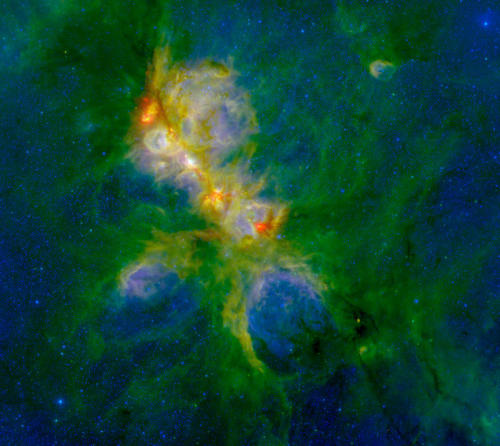
Cat's Paw Nebula 'Littered' With Baby Stars (NGC 6334)
Credit: S. Willis (CfA); ESA/Herschel ; NASA/JPL-Caltech/SSC; CTIO/NOAO/AURA/NSF
Have scientists actually found the missing link of the human evolution yet?
I don't know what you mean in particular but, in general, I can give you a piece of news that will shock you… They are no longer looking for it. Why? Because it would be as if they were looking for the unicorn. Scientists are a bit strange, but not completely crazy ; )
Bill Gates Invests in Science Social Network ResearchGate By Liz...

Bill Gates Invests in Science Social Network ResearchGate
By Liz Gannes
While it might sound like a nifty idea to connect scientists around the world to share data and projects, it's probably time to take ResearchGate more seriously. That's what Bill Gates and Tenaya Capital are doing, by putting a $35 million Series C round into the Berlin-based startup.
ResearchGate isn't a significant business yet — for now, it just runs a job board — but it is starting to have a significant effect on how some scientists do their work and make discoveries. The company has 2.9 million members, and a growing pile of successful collaborations.
For instance, an Italian pathogen researcher, Orazio Romeo, wasn't able to go on a data collection trip, due to budget cuts, and through ResearchGate he connected with a Nigerian scientist, Emmanuel Nnadi, who had a pile of relevant samples but no equipment to analyze them. Together they've published several papers and recently discovered a deadly new type of yeast.
ResearchGate CEO Ijad Madisch, a medical doctor who researches viruses, said he's most gratified to see that scientists are now sharing their failed datasets and negative results — not just their positive results that get accepted to peer-reviewed journals.
"I'm sure we would have had much more scientific breakthroughs if we had shared all the data sets we had made in the past," Madisch said.
That was the appeal to Gates, as well, Madisch said, and in particular that ResearchGate was a "lifetime project" and not some built-to-flip startup.
So what's all the money for? Three things, Madisch said: First, improving its scientific reputation algorithm, and second, opening an API, so people can build more apps to help scientists collaborate. Third, becoming a paid marketplace for scientific products and services — that's the larger intended business model.
Today, ResearchGate has 100 employees. It was previously backed by Benchmark Capital and Accel Partners. News of the new round — but at a lower amount — had first broken in the German Wall Street Journal. Competitors include Academia.edu, which has raised $6.7 million from investors including Spark Capital and True Ventures.
Source: allthingsd.com
odditiesoflife: The Size of a Nano Just how small is a "nano?"...

The Size of a Nano
Just how small is a "nano?" In the International System of Units, the prefix "nano" means one-billionth, or 10-9; therefore one nanometer is one-billionth of a meter. It's difficult to imagine just how small that is, so here are some examples:
- A sheet of paper is about 100,000 nanometers thick
- A strand of human DNA is 2.5 nanometers in diameter
- There are 25,400,000 nanometers in one inch
- A human hair is approximately 80,000-100,000 nanometers wide
- A single gold atom is about a third of a nanometer in diameter
- On a comparative scale, if the diameter of a marble was one nanometer, then diameter of the Earth would be about one meter
- One nanometer is about as long as your fingernail grows in one second
Cloning a mammoth
Cloning a mammoth:This might not be the best idea…
Energy, energy everywhere! It is well known that certain...


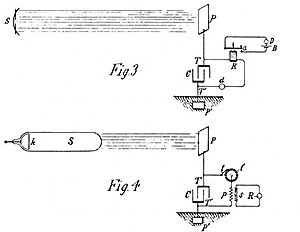
Energy, energy everywhere!
It is well known that certain radiations—such as those of ultra-violet light, cathodic, Roentgen rays, or the like—possess the property of charging and discharging conductors of electricity… My own experiments and observations lead me to conclusions more in accord with the theory heretofore advanced by me that sources of such radiant energy throw off with great velocity minute particles of matter which are strongly electrified, and therefore capable of charging an electrical conductor, or, even if not so, may at any rate discharge an electrified conductor either by carrying off bodily its charge or otherwise.
— Nikola Tesla, "Apparatus for the Utilization of Radiant Energy".
According to Tesla, (his) "ether" holds an immense quantity of energy in potential state, available to be used by anyone who possesses the appropriate equipment.
So, employing what will be called the Schumann resonance to charge the Earth's atmosphere — or better yet, employing what he calls the [free] "radiant energy" — (positively charged) and a wireless system to transmit electrical power over any distance, everyone in every part of the world could receive electricity straight from the sky with a simple receiver linked to the ground (negatively charged).
Wonderful!
The problem is that all this is theoretical and, at the moment, scientists who have officially tested this concept affirm that it's unworkable.
Is this convenient for all the powerful masters of the world? I don't know. I certainly would like to see more serious and peer-reviewed studies about this topic. Conversely, there are a lot of conspiracy theories behind this concept but, since none of these theories alleges objective evidences, we enter in the pseudoscience's range, that I refuse to discuss.
To learn more, I recommend you to go directly to the source. So here Tesla's patents relating to this topic.
For the radiant energy device
685957 - Apparatus for the Utilization of Radiant Energy.
For wireless power system through earth
593138 - Electrical Transformer.
645576 - System of Transmission of Electrical Energy.
649621 - Apparatus for Transmission of Electrical Energy.
Asked by dorianslover.
sagansense: "Fortunate are those who have learned to see, in...
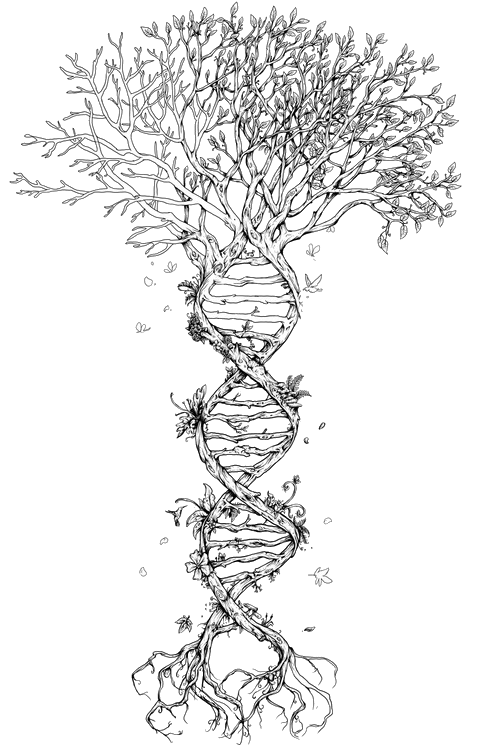
"Fortunate are those who have learned to see, in the wild things of nature, something to be loved, something to be wondered at, something to be reverenced, for they will have found the key to a never-failing source of recreation and refreshment."- Hugh B. Cott, Adaptive Colouration in Animals (1940)
(image via robotgod)
afracturedreality: HeLa Cell Dividing Her name was Henrietta...

HeLa Cell Dividing
Her name was Henrietta Lacks, but scientists know her as HeLa. She was a poor Southern tobacco farmer [whose] cells—taken without her knowledge—became one of the most important tools in medicine. The first "immortal" human cells grown in culture, they are still alive today, though she has been dead for more than sixty years. If you could pile all HeLa cells ever grown onto a scale, they'd weigh more than 50 million metric tons—as much as a hundred Empire State Buildings. HeLa cells were vital for developing the polio vaccine; uncovered secrets of cancer, viruses, and the atom bomb's effects; helped lead to important advances like in vitro fertilization, cloning, and gene mapping; and have been bought and sold by the billions.
Yet Henrietta Lacks remains virtually unknown, buried in an unmarked grave. … And though the cells had launched a multimillion-dollar industry that sells human biological materials, her family never saw any of the profits.
In The Immortal Life of Henrietta Lacks, Rebecca Skloot shows how the riveting story of the Lacks family is "inextricably connected to the dark history of experimentation on African Americans, the birth of bioethics, and the legal battles over whether we control the stuff we are made of."
Photo credit: Thomas Deerinck./ Visuals Unlimited, Inc.
mothernaturenetwork: Underwater photo contest winners...

Winners from the 2013 Annual Underwater Photography Contest held by the University of Miami Rosenstiel School of Marine & Atmospheric Science epitomize the beautiful diversity of the open oceans.
"The more advanced our technology becomes, the less we have to move at all—a futuristic reality,..."
"The more advanced our technology becomes, the less we have to move at all—a futuristic reality, signs of which we're beginning to see with the rise of voice-recognition software. Does this mean that gestures might one day become obsolete? "If the computer can track your eye gaze and know what you're looking at, you don't need to make a gesture," says Jason Riggle, an assistant linguistics professor at the University of Chicago. Of course, if the primary purpose of gesturing is to help us think, we'll continue to wave our hands even as we talk to Siri. And as long as the meaning of an emblematic gesture is relevant, the physical antecedent of that gesture may be less so."-
Fascinating read on the evolution of hand gestures and why some die out while others endure.
Complement with the fine art of Italian hand gestures and why our hands are the most amazing devices.
(via explore-blog)
A world without gestures, for me, is like a book without punctuation.
Quantum Computing Explained
Quantum Computing Explained:Scientists say quantum computers could be built to operate up to a million times faster than conventional computers. But how do they work? And how close are we to putting them in homes and offices around the world?
Here's an interactive explanation.
sciencephotolibrary: Red blood cells. Coloured scanning...

Red blood cells. Coloured scanning electron micrograph (SEM) of human red blood cells (erythrocytes). Red blood cells are biconcave, giving them a large surface area for gas exchange, and highly elastic, enabling them to pass through narrow capillary vessels. The nucleus and other organelles are lost as the cells mature. The cell's interior is packed with haemoglobin, a red iron-containing pigment that has an oxygen-carrying capacity. The main function of red blood cells is to distribute oxygen to body tissues and to carry waste carbon dioxide back to the lungs.
Here Doc Kon-igi's answer. "Flügge droplets… we...

Here Doc Kon-igi's answer.
"Flügge droplets… we meet again!"
Tuberculosis is a disease mainly caused by an extremely resistant and aggressive mycobacterium (Mycobacterium tuberculosis). The bacteria are carried by droplets of saliva or nasal secretions expelled with a cough or a sneeze by infected organisms.
These particles — called Flügge droplets, after the German scientist who hypothesized their contaminant ability — have a very small diameter, in the order of 0.5-5 micrometers, and at the time of infection they are inhaled by a healthy organism that is in proximity of an infected person.
More info here.
Asked by godavidatkins - Ask kon-igi & science-junkie a question.
Without Warning by Goldpaint Photography I drove to Crater Lake...
Without Warning by Goldpaint Photography
I drove to Crater Lake National Park on the night of May 31, 2013 to photograph the Milky Way rising above the rim. I've waited months for the roads to open and spring storms to pass, so I could spend a solitude night with the stars. Near 11pm, I was staring upward towards a clear night sky when suddenly, without warning, an unmistakable faint glow of the aurora borealis began erupting in front of me. I quickly packed up my gear, hiked down to my truck, and sped to a north facing location. With adrenaline pumping, I raced to the edge of the caldera, set up a time-lapse sequence, and watched the northern lights dance until sunrise. The moon rose around 2am and blanketed the surrounding landscape with a faint glow, adding depth and texture to the shot. The last image in the sequence above shows the route of the International Space Station (ISS) which flew over at 2:35am.
How serious is this geo-magnetic storm that hit Earth these couple of days? (I think it's G-1) Can you tell me something more about it ?
The geomagnetic storm of these days seems to have reached Kp=6 which is a class G2 (moderate) storm. According spaceweather.com "The source of the display was an interplanetary shock wave, which hit Earth's magnetic field during the late hours of May 31st. Forecasters still aren't sure where the shock wave came from. Current speculation focuses on a corotating interaction region (CIR)-a shock-like transition zone between slow and fast streams of solar wind."
jtotheizzoe: This is where all our greenhouse gases come from …...

This is where all our greenhouse gases come from … sources, users and the volume of gases. Also check a more in-depth analysis at Grist.
One thing to remember is that while a gas like methane is only 1/5th of the emission volume, its greenhouse effect is 20 times that of CO2, pound for pound.
A step closer to artificial livers Prometheus, the mythological...

A step closer to artificial livers
Prometheus, the mythological figure who stole fire from the gods, was punished for this theft by being bound to a rock. Each day, an eagle swept down and fed on his liver, which then grew back to be eaten again the next day.
Modern scientists know there is a grain of truth to the tale, says MIT engineer Sangeeta Bhatia: The liver can indeed regenerate itself if part of it is removed. However, researchers trying to exploit that ability in hopes of producing artificial liver tissue for transplantation have repeatedly been stymied: Mature liver cells, known as hepatocytes, quickly lose their normal function when removed from the body…
Now, Bhatia and colleagues have taken a step toward that goal. In a paper appearing in the June 2 issue of Nature Chemical Biology, they have identified a dozen chemical compounds that can help liver cells not only maintain their normal function while grown in a lab dish, but also multiply to produce new tissue.
Cells grown this way could help researchers develop engineered tissue to treat many of the 500 million people suffering from chronic liver diseases such as hepatitis C, according to the researchers.
Full Article
Image: [x]

No comments:
Post a Comment